Cold Plunge Temperature Guide: Optimal Ranges, Safety Limits, and How to Choose the Right Cold

Choosing the right cold plunge temperature is one of the most important—and most misunderstood—parts of cold water immersion. Too cold, too soon increases risk. Too warm, and the physiological stimulus suggests limited adaptation.
This guide explains optimal temperature ranges, safety limits, and how to choose the right level of cold based on experience, goals, and tolerance—using conservative, science-aligned framing rather than extremes.
If you are building a consistent routine, it helps to treat temperature as a “dial” you adjust gradually, not a badge of toughness. For related foundational reading, see Cold Plunge Benefits and the Plunge Sage Blog Index.
How Cold Water Temperature Affects the Body

Cold water temperature determines the intensity of the physiological response. As water temperature drops, skin thermoreceptors signal the brainstem, triggering rapid autonomic reactions.
- Peripheral vasoconstriction reduces heat loss
- Heart rate and blood pressure may temporarily rise
- Breathing becomes rapid before stabilizing
Colder water amplifies these responses, but intensity does not always correlate with better outcomes. Adaptation depends on consistency and safety rather than extremes.
A helpful way to think about temperature is stimulus versus control. Water that is “cold enough” creates a clear signal (discomfort, alertness, urge to gasp), while water that is “too cold” reduces control (breathing becomes chaotic, panic rises, and decision-making becomes impaired). The most reliable benefits come from repeatable exposure where you can maintain basic control of your breath and exit safely on purpose.
From a physiology standpoint, cold water increases heat transfer away from the body much faster than air at the same temperature. That is part of why small temperature changes can feel large. A drop from 55°F to 50°F can be meaningfully more intense, even though the difference looks small on paper.
Temperature also interacts with exposure time. A moderate temperature for a longer duration can be similar in “total load” to a colder temperature for a short duration. If you are dialing in your routine, it is often safer to adjust one variable at a time—either temperature or duration—rather than lowering temperature and increasing time simultaneously.
If you want a deeper overview of how the body responds at the nervous-system level (including why breathing control matters so much in the first 30–60 seconds), see Cold Plunge and the Nervous System.
Common Cold Plunge Temperature Ranges Explained

Most cold plunge protocols fall within predictable temperature bands. Understanding these ranges helps set realistic expectations.
- 50–59°F (10–15°C): Mild cold exposure, suitable for beginners
- 45–49°F (7–9°C): Moderate cold with noticeable stress response
- 39–44°F (4–6°C): Advanced range requiring experience
- Below 39°F (4°C): High risk; not recommended for routine use
These bands are not “tiers of success.” They are practical ranges that reflect how quickly the cold shock response tends to rise and how hard it is to maintain calm breathing. Many people can build a consistent routine in the 50–55°F range and still experience meaningful adaptation over time.
It can also help to define what “mild,” “moderate,” and “advanced” mean in practice:
- Mild: You feel strong cold, but breathing can be controlled within 20–60 seconds.
- Moderate: The first minute is challenging; controlled breathing takes focused effort.
- Advanced: Breathing control is difficult without training; sessions should be shorter and carefully supervised.
If you find yourself needing to “white-knuckle” every session, that is a sign the temperature may be below your current threshold for safe repeatability. In conservative protocols, repeatability matters because it reduces the odds of one bad session (panic, slipping, staying in too long, or misjudging cold intensity).
For more context on how cold immersion is discussed in clinical and exercise settings (including how cold exposure is framed conservatively), you can browse summaries and related studies via PubMed and general health guidance on NIH.
Optimal Temperature for Beginners

For beginners, safety and adaptation matter more than intensity. Starting too cold can disrupt breathing control and increase cardiovascular strain.
A recommended beginner range is 50–55°F (10–13°C). This temperature reliably produces cold shock sensations without overwhelming the nervous system.
Beginners should prioritize calm breathing and short exposure over colder water. Additional beginner guidance is covered in Cold Plunge for Beginners.
A practical decision rule for beginners is: choose the coldest temperature where you can still do three things consistently:
- Control breathing within the first minute (no prolonged gasping)
- Maintain awareness (you can think clearly enough to monitor time and sensations)
- Exit deliberately (you are not “stuck” in the cold because you overshot your tolerance)
If you cannot meet those three criteria, the temperature is likely too cold for your current baseline. In that case, warm the water slightly or shorten the session. The goal is to build a stable routine you can maintain for weeks, not to “win” a single session.
Beginners may also benefit from a simple ramp plan:
- Start at 55°F for 2–3 sessions
- Move toward 52–53°F once breathing stabilizes faster
- Consider 50°F only after the routine feels controlled and repeatable
If you have questions about risk factors, medical clearance, or how to approach cold plunge conservatively, the safest path is to review Cold Plunge Safety & Usage and contact your clinician as needed. If you need to reach the site team for clarification on editorial standards or corrections, use Contact Plunge Sage.
Temperature Ranges for Recovery and Performance

Athletes and physically active individuals often seek colder temperatures for perceived recovery benefits. Research suggests moderation remains important.
- 45–50°F (7–10°C) is commonly used for soreness management
- Colder temperatures may increase discomfort without added benefit
Excessively cold water immediately after strength training may interfere with hypertrophy signaling, according to research summarized by PubMed.
From a practical perspective, many performance-minded users do well with a “recovery-first” temperature plan:
- Post-training (same day): lean toward the moderate end (often ~45–50°F) with shorter sessions
- High-intensity training blocks: prioritize consistency and manageable cold over chasing colder water
- Strength/hypertrophy phases: separate cold exposure from lifting when possible (for example, later in the day), and keep sessions conservative
Temperature can also be adjusted based on what you are trying to accomplish:
- Primary goal = soreness management: moderate cold that you can repeat without dread tends to be more sustainable.
- Primary goal = mental toughness / stress practice: you may use slightly colder temperatures, but only if breathing remains controllable.
If you want a broader timing framework (including how cold plunge interacts with workouts and recovery windows), see Cold Plunge Before or After Workout.
Cold Plunge Temperature and the Nervous System

Colder temperatures trigger stronger sympathetic activation. Over time, controlled exposure may improve autonomic flexibility.
However, repeated exposure below tolerance thresholds may increase stress rather than resilience. The goal is controlled stimulation followed by recovery, not constant maximal activation.
This balance is explored further in Cold Plunge and the Nervous System.
A conservative way to use temperature for nervous system training is to focus on the transition from activation to recovery:
- Activation phase (first 30–60 seconds): cold shock is strongest; aim for steady exhale control.
- Stabilization phase (after the first minute): breathing slows; perceived intensity often drops.
- Exit + rewarm phase: the nervous system settles; this is where many people notice calm and clarity.
If you are not reaching a stabilization phase—because the cold remains overwhelming—temperature is likely below your current “trainable” range. Lowering intensity slightly can improve the quality of the nervous-system practice because you can actually execute the skill (breathing control) instead of simply enduring discomfort.
For readers also curious about downstream effects such as sleep and stress regulation, you can cross-reference How Cold Plunge Affects Sleep and Cold Plunge for Stress.
Safety Limits and Contraindications
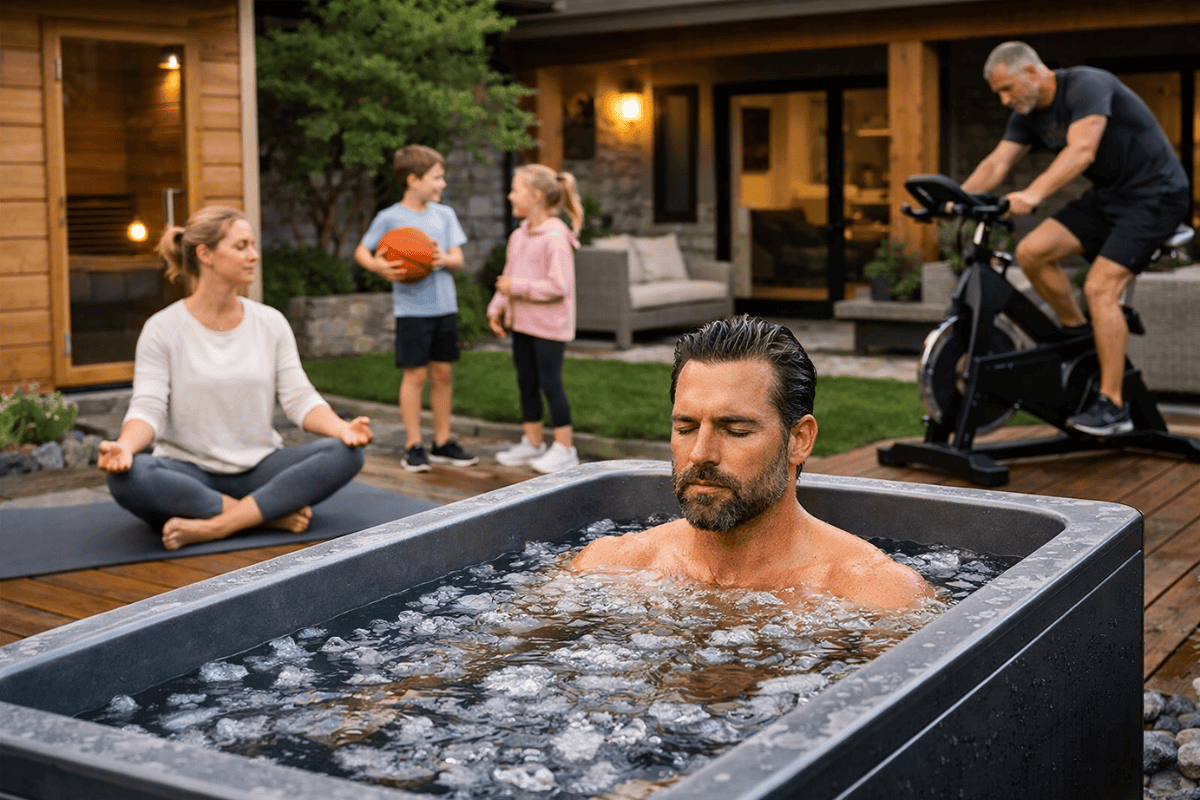
There is no universal “safe minimum” temperature for everyone. Individual health status matters.
- Cardiovascular conditions require medical clearance
- Cold-induced asthma may worsen in colder water
- Numbness and loss of coordination are warning signs
The Cleveland Clinic advises avoiding extreme cold exposure without supervision, especially for those with heart conditions.
In practice, “safety limits” often show up as behavioral and sensory warning signs rather than a single temperature number. Consider temperature to be unsafe for you if any of the following occur:
- Breathing stays uncontrolled beyond the first minute
- You feel dizzy, faint, or unusually confused
- Your hands become too numb to grip rails or edges securely
- You cannot exit quickly and deliberately
A conservative safety framework also includes environmental controls:
- Never plunge alone if you are new, pushing colder temperatures, or using outdoor winter conditions.
- Use stable footing and keep towels/robes ready to reduce slip risk during exit.
- Set a timer before entry so judgment is not impaired by discomfort.
If you want a detailed safety overview and conservative usage guidance, review Cold Plunge Safety & Usage. If you notice content inaccuracies or want to request an update, use Contact Plunge Sage.
Choosing Temperature Based on Your Goal

Different goals call for different temperature strategies.
- Stress resilience: 50–55°F with controlled breathing
- Recovery: 45–50°F for short sessions
- Habit building: Warmer temperatures used consistently
If your goal is to build a long-term practice, it can help to pick a “default temperature” and stay there for several weeks. Consistency gives you a stable baseline so you can observe adaptation (breathing stabilization, reduced panic, easier rewarming) without constantly changing the stimulus.
Temperature Adaptation Over Time
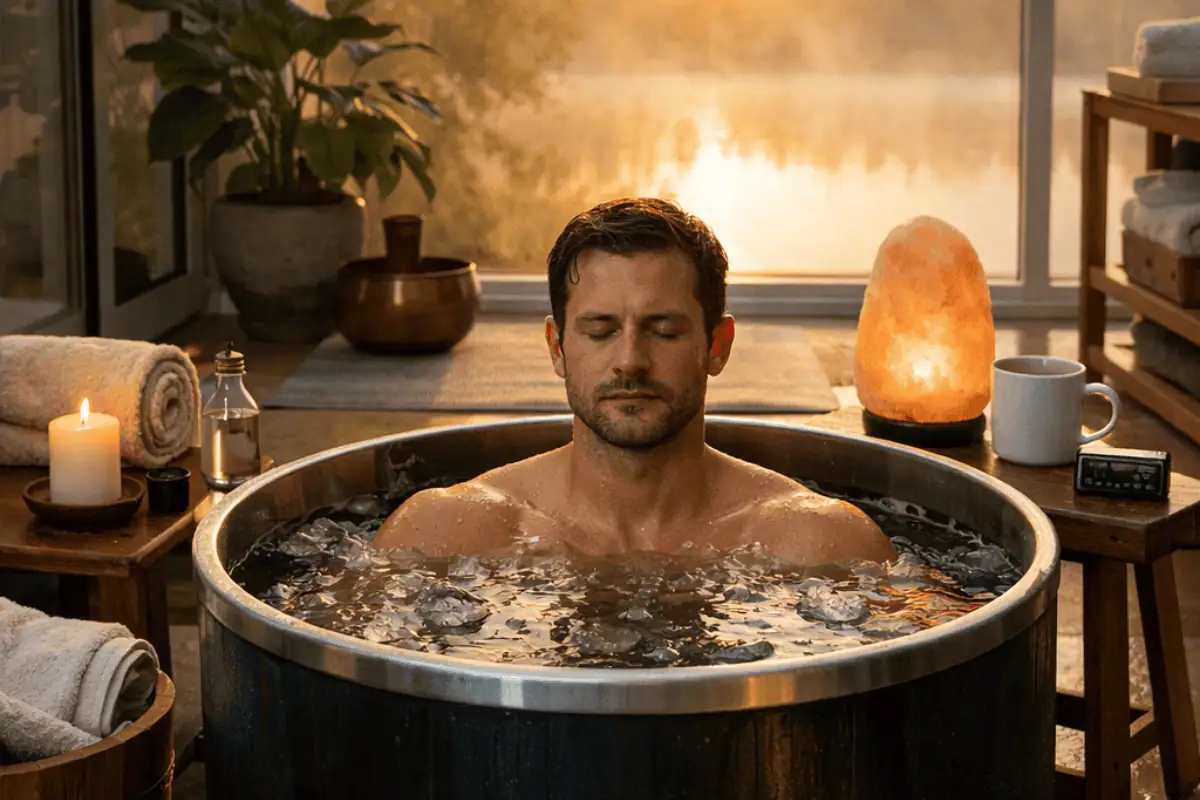
Adaptation occurs as breathing stabilizes faster and perceived discomfort decreases. This does not mean colder is required.
Gradual reduction—1–2°F every few weeks—is more sustainable than abrupt drops.
It is also normal for adaptation to be non-linear. Some weeks you may feel more sensitive to cold due to sleep, stress load, training volume, or the simple reality that cold exposure is a stressor. That does not mean you are “losing progress.” In conservative protocols, the right move is often to hold temperature steady (or slightly warmer) until sessions feel controlled again.
A simple way to evaluate adaptation without chasing extremes is to track these practical markers:
- Breathing time-to-control: how quickly gasping fades into steady breathing
- Perceived intensity at minute 1: whether discomfort remains manageable
- Rewarming quality: whether you can rewarm comfortably without excessive shivering
If you want a complementary framework, temperature also pairs with duration and frequency. Many people get better results by keeping temperature moderate and improving routine consistency. You can explore those variables in Cold Plunge Duration Guide and Cold Plunge Frequency Guide.
Ownership reality matters here: the more frequently you plunge, the more important it becomes to choose a temperature you can maintain without dread. If you continually “overshoot” into water that feels overwhelming, adherence tends to drop—and adherence is often the limiting factor for long-term outcomes.
Ice Baths vs Temperature-Controlled Cold Plunges
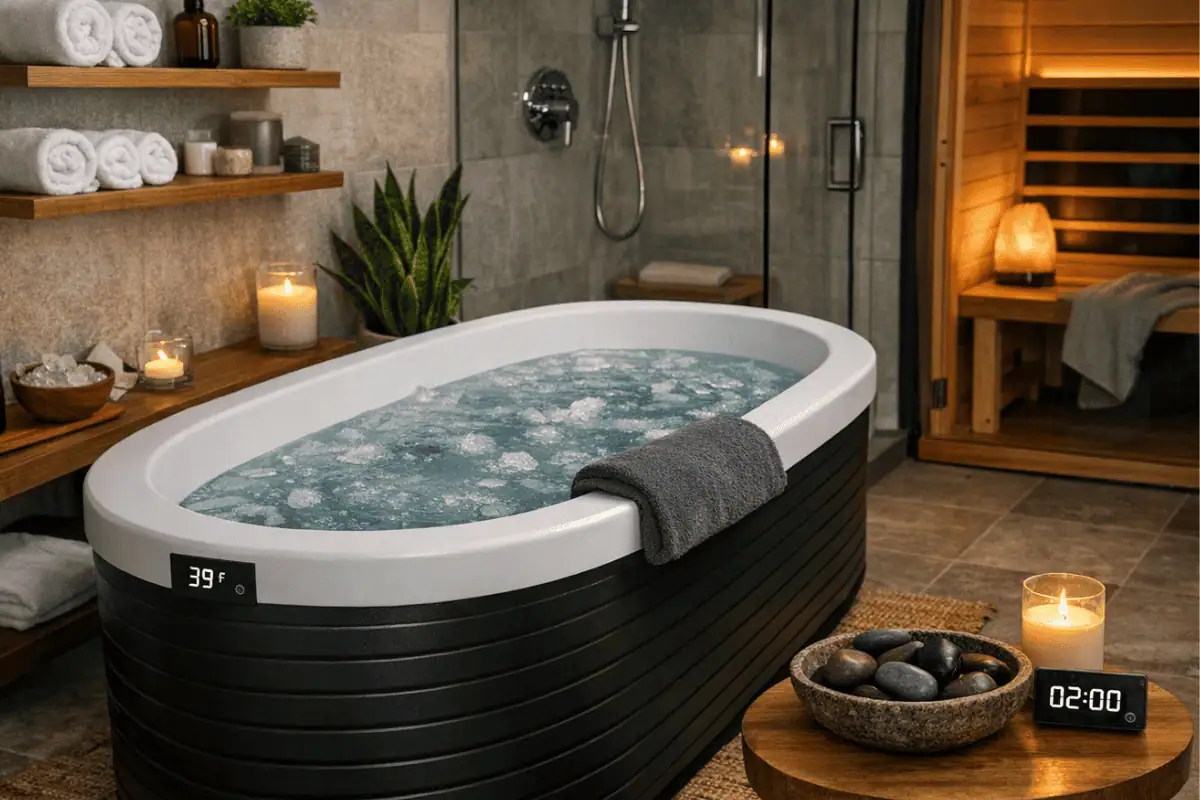
Ice baths often fluctuate below intended temperatures, increasing risk. Temperature-controlled systems offer consistency and repeatability.
This distinction is covered in detail in Cold Plunge vs Ice Bath.
If your primary goal is to control temperature precisely, the main advantage of a controlled system is not “more cold,” but predictable cold. Predictability makes it easier to set a safe baseline, compare sessions week-to-week, and avoid accidental overexposure from too much ice or uneven mixing.
Monitoring Water Temperature Accurately

Accurate temperature measurement prevents accidental overexposure. Built-in digital controls or external thermometers improve reliability.
Manual ice estimation often leads to colder-than-expected water.
If you are using an ice bath, measurement can be improved by:
- Stirring water thoroughly before reading temperature (stratification can mislead)
- Measuring away from the ice pile, where localized temperatures are lower
- Waiting a few minutes after adding ice so temperature stabilizes
If your goal is consistency, it helps to log temperature, duration, and subjective intensity (for example, “breathing controlled by 45 seconds”). That simple tracking makes it easier to choose safe adjustments without guessing.
Temperature Myths and Misconceptions

Common myths include the belief that colder is always better or that numbness signals effectiveness. Neither is supported by evidence.
The Mayo Clinic emphasizes gradual exposure and awareness of warning signs.
Other misconceptions worth addressing:
- “If it’s not below 40°F, it doesn’t count.” Many people respond well to moderate temperatures applied consistently.
- “Shivering is always a good sign.” Shivering is a normal thermoregulatory response, but excessive or prolonged shivering can be a sign you pushed too far for your current tolerance.
- “You should feel numbness to get benefits.” Numbness can reduce motor control and increase risk, especially when exiting.
If you want to connect temperature choices to broader outcomes (sleep, recovery, circulation), review Cold Plunge Benefits. For more educational posts across the site, use the Blog Index.
Conclusion
Cold plunge temperature determines both benefit and risk. Optimal ranges vary by experience level, goal, and health status.
Most people benefit from moderate temperatures applied consistently rather than extreme cold used sporadically.
If you are considering long-term cold plunge use, explore equipment options and temperature control considerations in our Best Cold Plunge Tubs Buyer’s Guide.
If you are unsure where to start, choose a temperature you can repeat safely and build from there in small, deliberate steps.
